





In a new twist to waste-to-fuel technology, scientists have developed an electrochemical process that uses tiny spikes of carbon and copper to turn carbon dioxide, a greenhouse gas, into ethanol. Read more here:: http://feeds.sciencedaily.com/~r/sciencedaily/matter_energy/fuel_cells/~3/ieGHyPbcVcw/161012183520.htm

A new study has presented an effective and simple strategy to simutaneously improve and stablize the performance of Organic Solar Cells. Read more here:: http://feeds.sciencedaily.com/~r/sciencedaily/matter_energy/solar_energy/~3/XNcGbM_Ibko/161012122144.htm

By Robin Sayles Précis: Solar thermal news you need to know. SolarReserve plans to build 2 GW CSP capacity in Nevada, US U.S. developer SolarReserve has announced plans to build up to 2 GW of new CSP tower capacity in Nevada, according to local media reports. The $5 billion Sandstone…
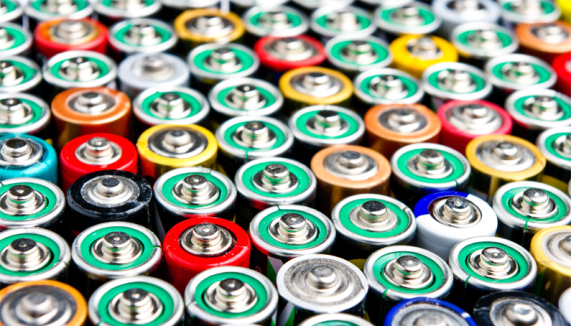
LEIDEN/PETTEN – The Energy research Centre of the Netherlands (ECN) has developed a new technology that increases the storage capacity of rechargeable batteries by 50 per cent. With this technology, the range of electric vehicles (EVs) can be increased, batteries in smartphones, laptops and other electronic devices will last longer,…

Gland, Switzerland and Zwanenburg, Netherlands October 11, 2016 -AEG Power Solutions, a global provider of power supply solutions for critical applications and Burland Energy SA today announced the signing of an UPSaaS™ sales and service agreement. This partnership allows customers to receive fully conditioned power to their mission critical facilities at…...

The report provides a clear overview of and detailed insight into the global wind market. It provides data covering historic and forecast market size, average capital cost, installed capacity and generation for onshore and offshore wind globally, and in ten key wind power markets – China, India, Brazil, Canada, Turkey,…

A team of researchers has used the shape of cicada wings as a template to create antireflective structures fabricated with one of the most intriguing semiconductor materials, titanium dioxide. The antireflective structures they produced are capable of suppressing visible light — 450 to 750 nanometers — at different angles of…

In the race towards miniaturization, a research team has succeeded in improving the energy density of a rechargeable battery without increasing its size (limited to a few square millimeters in mobile sensors). This feat was achieved by developing a 3D structure made of microtubes, the first step towards producing a…

Researchers set out to answer one not-so-simple question: Is it feasible to build and operate a high-speed passenger ferry solely powered by hydrogen fuel cells? The answer is yes. Read more here:: http://feeds.sciencedaily.com/~r/sciencedaily/matter_energy/fuel_cells/~3/NNkNnDrL4Ko/161010221053.htm

Ever since J.J. Thompson’s 1897 discovery of the electron, scientists have attempted to describe the subatomic particle’s motion using a variety of different means. Electrons are far too small and fast to be seen, even with the help of a light microscope. This has made measuring an electron’s movement very…