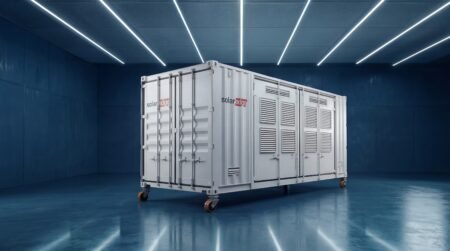
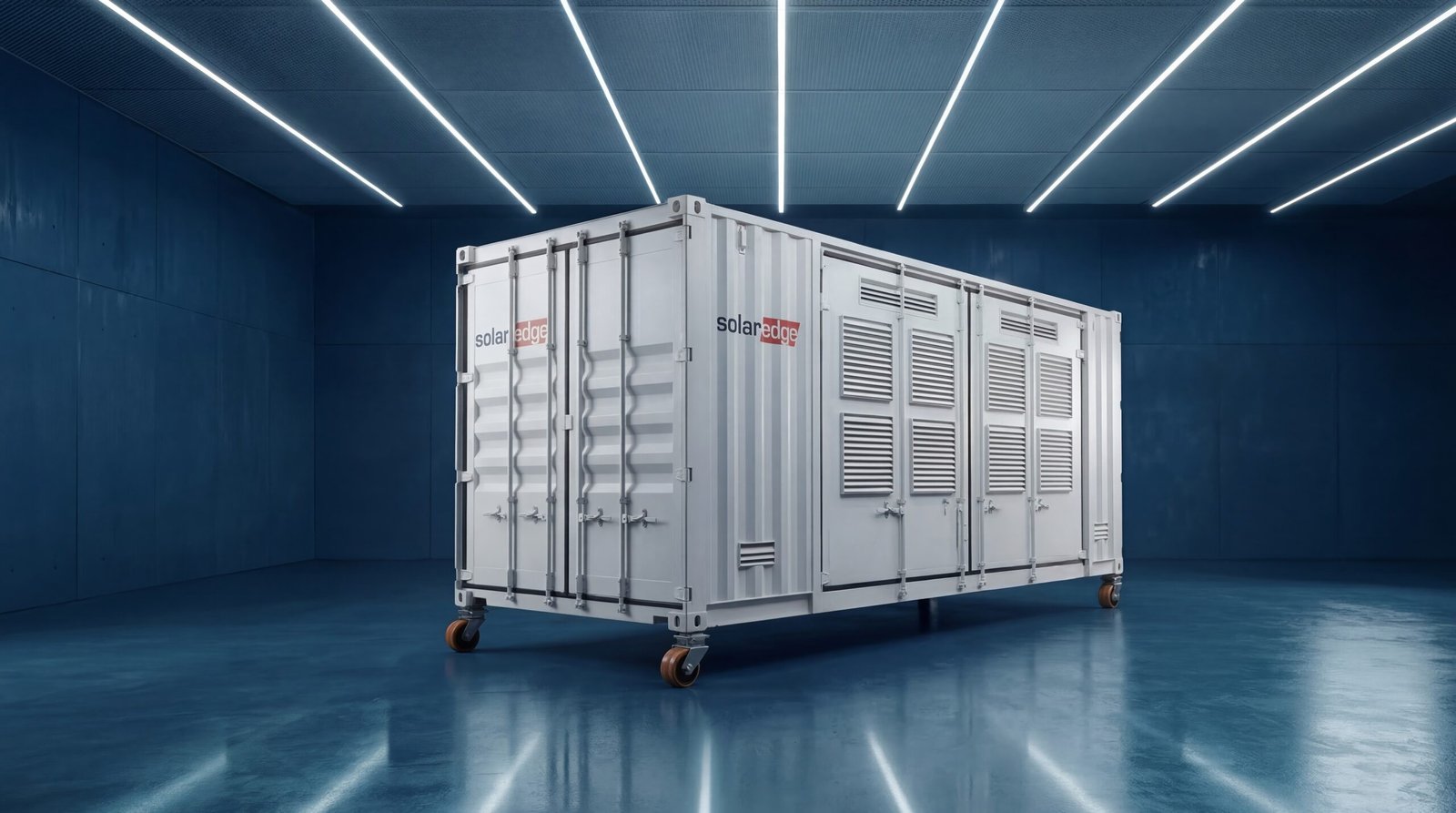
In a significant advancement for the energy sector, SolarEdge Technologies has announced the successful operation of its medium-voltage to 800 VDC conversion stage, specifically designed for artificial intelligence (AI) data centres. This milestone, achieved in the company’s engineering laboratories, marks a crucial step towards the adoption of 800 VDC distribution systems, which promise to enhance efficiency and reliability in data centre operations.
Development of a Protection Framework
Alongside this operational achievement, SolarEdge has published a comprehensive protection and grounding framework for 800 VDC systems, developed in collaboration with NVIDIA. This framework is outlined in a joint white paper titled “800 VDC Protection and Grounding for AI Data Centres,” which is intended for industry evaluation. The document is designed to be technology-neutral, allowing for implementation by various vendors, thereby facilitating a collaborative approach among operators, suppliers, and standards bodies.
Addressing Unique Challenges of DC Systems
As the industry transitions towards 800 VDC distribution, it becomes evident that many existing protection practices, which were originally developed for alternating current (AC) environments, do not adequately apply to converter-fed direct current (DC) architectures. The white paper aims to clarify the necessary functions, evidence, and validation required for the safe deployment of 800 VDC systems.
Key aspects of the framework include a detailed evaluation of grounding options and the criteria for selecting grounding impedance. Additionally, it introduces a zone-based protection approach that ensures fault location while maintaining continuous operation in restricted facility zones, and immediate interruption at the rack interface where personnel are present. This dual-layered strategy is crucial for maintaining safety in environments where high voltages are present.
Encouraging a Multi-Vendor Ecosystem
NVIDIA has expressed its support for an open, multi-vendor ecosystem for 800 VDC systems, advocating for the exploration of various conversion topologies, grounding configurations, and protection technologies. The SolarEdge architecture presented in the white paper serves as one potential implementation, aimed at fostering engineering discussions and validation within the industry. Notably, the framework does not impose universal requirements but rather presents high-resistance midpoint grounding, solid-state transformers, and solid-state circuit breakers as candidate approaches.
Importance of Collaboration and Validation
Shuki Nir, the Chief Executive Officer of SolarEdge, emphasised the importance of collaboration across the ecosystem to ensure the successful transition to 800 VDC systems. He stated, “The transition to 800 VDC will ultimately depend on whether these systems can be protected, serviced and trusted at scale.” This highlights the necessity for a unified effort among industry stakeholders to establish reliable and safe operational standards.
The functions that underpin the protection of 800 VDC systems, such as series arc detection, DC disconnection, and insulation monitoring, have been integral to SolarEdge’s photovoltaic products for over a decade. However, while these components have a proven track record, they do not constitute validation for data centre applications. To address this gap, SolarEdge is actively developing a data centre platform that includes a medium-voltage solid-state transformer, DC distribution with per-branch residual current measurement, solid-state interruption, insulation monitoring, and comprehensive system-level monitoring. These products are currently under development and validation, and are not yet available for general use.
Invitation for Independent Evaluation
SolarEdge is open to independent technical evaluations of its framework and invites operators, vendors, and standards bodies to engage in testing and challenging the proposed guidelines. This openness is indicative of the company’s commitment to ensuring that the framework meets the rigorous demands of the industry and can be effectively implemented across various applications.
Conclusion
The collaboration between SolarEdge and NVIDIA represents a pivotal moment in the evolution of data centre technology, particularly as the industry shifts towards higher voltage DC systems. The publication of the protection and grounding framework is a proactive step towards ensuring that 800 VDC systems can be deployed safely and effectively, paving the way for more efficient and reliable AI data centres in the future.
This article was submitted via the World of Renewables press desk.
You can join now and receive a FREE HTML email send to 10,000 contacts of your choice (normally £1,900).