SolarEdge and Infineon Collaborate on 800 VDC Power Solutions for AI Data Centres
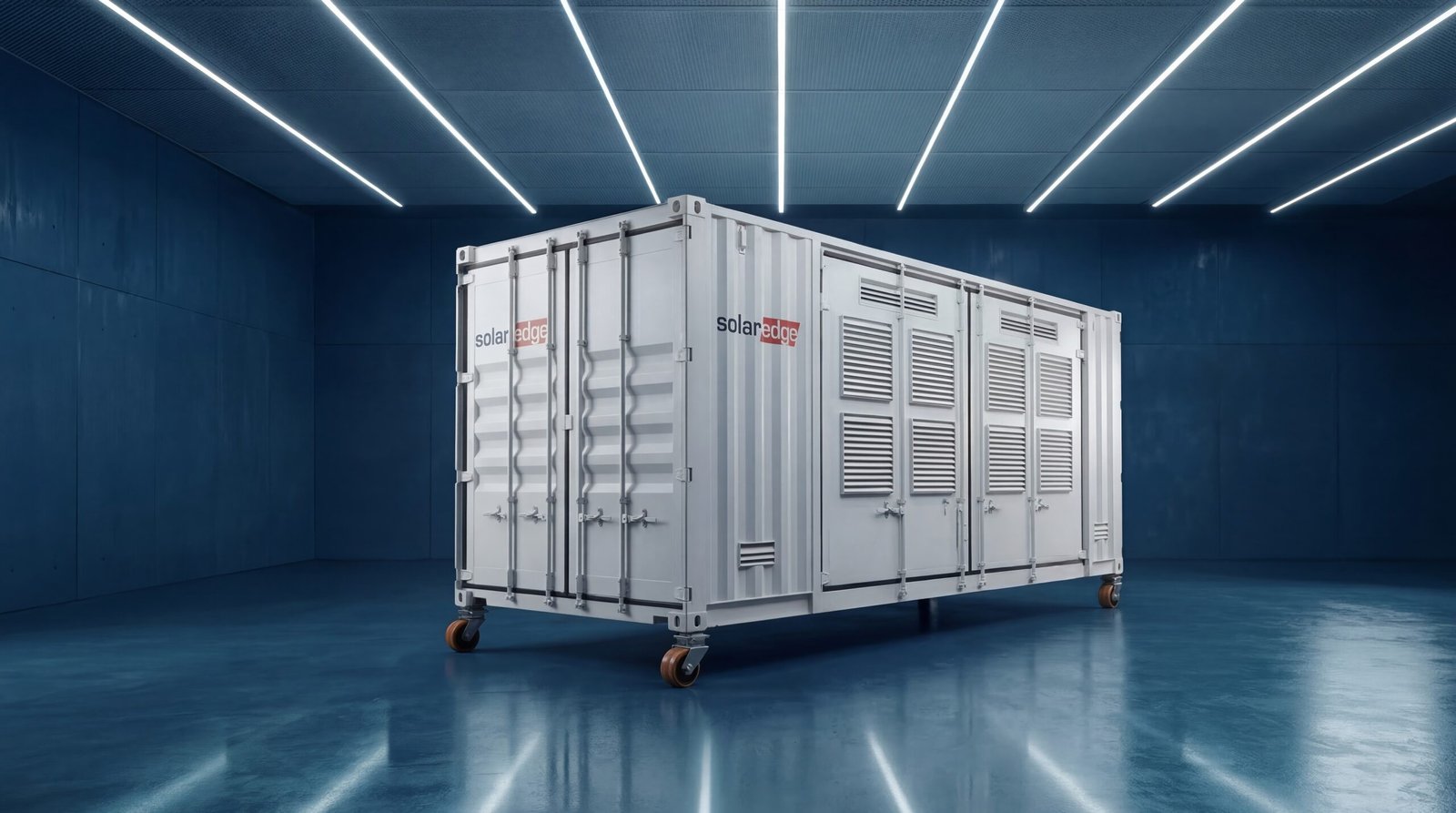
SolarEdge Technologies and Infineon Technologies have announced an extension of their collaboration to develop solid-state circuit breaker (SSCB) technology aimed at enhancing the safety and efficiency of 800 VDC power systems in artificial intelligence (AI) and hyperscale data centres. This partnership is set against the backdrop of a growing demand for high-voltage direct current (DC) architectures, which are increasingly being adopted to support the power needs of modern computing infrastructures.
Advancing Solid-State Circuit Breaker Technology
The collaboration between SolarEdge and Infineon focuses on addressing a significant challenge in the deployment of 800 VDC systems: the need for rapid fault isolation. Traditional electromechanical circuit breakers are not capable of interrupting DC faults quickly enough to ensure the safety and reliability of high-density power systems. In contrast, SSCBs are designed to interrupt faults orders of magnitude faster, thereby enhancing the safety of power-dense infrastructures.
Importance of Fast Fault Isolation
As AI compute density continues to rise, the industry is increasingly turning to higher-voltage DC distribution systems. The ability to isolate faults quickly is crucial for maintaining operational efficiency and safety in these environments. The SSCB technology being developed by SolarEdge, with the support of Infineon’s silicon carbide (SiC) JFET technology, aims to fill a critical gap in the distribution layer between solid-state transformers (SST) and compute racks. This advancement is expected to facilitate a more comprehensive grid-to-rack solution, which is essential for the future of AI data centres.
Environmental Considerations and Reliability
In addition to enhancing safety, the collaboration aims to improve the overall reliability and environmental impact of AI data centres. By enabling a DC-native power architecture that spans from medium-voltage grid connections through to distribution and ultimately to the rack, the partnership seeks to support higher density computing while reducing the carbon footprint associated with power distribution.
Future Implications for Data Centre Design
The implications of this collaboration extend beyond immediate technological advancements. As data centres evolve to meet the demands of AI and other high-performance computing applications, the integration of SSCB technology could redefine how power systems are designed and operated. The shift towards 800 VDC architectures may lead to more efficient energy use, lower operational costs, and improved sustainability in the long run.
Conclusion
The partnership between SolarEdge and Infineon represents a significant step forward in the development of high-voltage DC power solutions for AI data centres. By focusing on solid-state circuit breaker technology, the companies aim to address critical challenges in safety and efficiency, paving the way for the next generation of data centre infrastructure. As the demand for AI computing continues to grow, innovations like these will be essential in ensuring that data centres can operate safely and sustainably.
This article was submitted via the World of Renewables press desk.
You can join now and receive a FREE HTML email send to 10,000 contacts of your choice (normally £1,900).