


Jane Crichton, Associate Planning Director, Lanpro
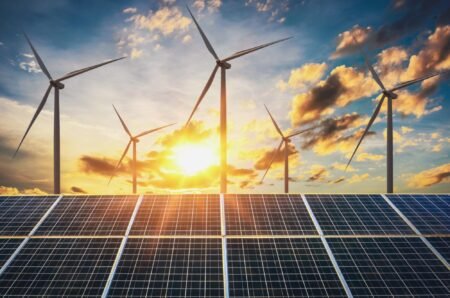
Within a week of last year’s general election, the then new government approved three new solar farms, at Mallard Pass, Rutland and Lincolnshire, Sunnica in Suffolk and Cambridgeshire, and Gate Burton in Lincolnshire. The projects could create a total power of 1.4GW – enough to power 406,994 homes and will cover 2,837 hectares.
The relationship between solar farms and conventional farming can be both contentious and mutually beneficial and, in an election year, it is no surprise that this politics have provided a platform on which the issues have been debated and discussed.
Prior to the election, the Conservative government had determined that due to growing geopolitical tensions, the best agricultural land must be protected for food security. Specifically, the then Energy Security Secretary told Parliament that large solar projects should not be located on ‘Best and Most Versatile’ land and instead focused on brownfield, contaminated, industrial and lower quality agricultural land, along with roof tops. She also announced plans to expand the Renewable Energy Planning Database to include up-to-date data on the type of land used by existing and planned solar projects, allowing government to track use of high-quality agricultural land more easily.
At the time several questions were asked: are these changes necessary? Should food security be prioritised over energy security? Is it necessary for solar farms and food security to be mutually exclusive? Or can solar represent an opportunity for landowners?
There is a common misconception that solar farms are a threat to national food security, But there is very little evidence to support this claim. Food security and solar farms are not mutually exclusive and the many other factors that are a threat to food security include climate change – something that renewable energy seeks to address.
In fact the DEFRA UK Food Security Report 2021 states that, “The production to supply ratio, important for understanding the UK’s self-sufficiency, has remained stable over the last two decades, and for crops that can be commercially grown in the UK has been around 75%”. It goes on to say that the threat to domestic production, “Faces a number of long-term and short-term risks, including soil degradation, drought and flooding, diseases, risks to fuel and fertiliser supplies, and changing labour markets. In the long term, climate change impacts are likely to have a negative effect on the proportion of high-grade arable farmland available in the UK”.
Fortunately following last year’s general election we now have a different Secretary of State (Ed Miliband) and a newly-named government department (the Department of Energy Security and Net Zero). And, unsurprisingly, the minister has a different position on this issue.
Ed Miliband has spoken out about the misconceptions that surround solar farms and their threat to food security. He said that ground-mounted solar was estimated to take up 0.1% of UK land in 2022. Clearly, this is a very small amount of land being taken out of production. Added to which, the use of fields for solar is only ever for a temporary period.
It is good news for the renewables industry that the new government has placed solar in the mix of renewable energy technologies that are of “critical national priority” in its aims to reach carbon zero by 2050. More recently, the government has shown its further commitment to the fast deployment and delivery of solar farms by amending the National Planning Policy Framework (NPPF) in relation to the threshold by which solar farms can be considered under the Town and Country Planning Act route – providing a quicker and faster route for solar power. Clearly the government appreciates that solar, at all scales, contribute to the country’s renewable energy mix, which reduces our reliance on fossil fuels, increases our energy and reduces cost to the consumer.
It is notable that the cost of energy is a significant constraint to food production: in fact it is one of the key indices identified in the UK Food Security Index 2024. Again, solar plays a part in reducing these costs.
Furthermore, the development of a solar farm brings with it an excellent opportunity to introduce a significant biodiversity improvement to the land. All of the solar projects that Lanpro has worked on have incorporated significant areas of wildflower meadows, pasture or meadow grassland, significant lengths of new hedgerows, and wetland habitat creation – each providing substantial benefits for wildlife. Another recent example is a solar farm project which included bee keeping. This will bring significant biodiversity which in turn has an impact on food production. The operator of the bee keeping business is also involved with training people to develop bee keeping skills.
And, importantly, solar and food production need not be mutually exclusive: it is commonplace for livestock, specifically sheep to graze on the land post construction.
Unfortunately concerns about solar impacting negatively on food security are all too common, but rarely based on fact. Such accusations overlook complexities of food production and security, and the innovative and often collaborative ways in which farmers and landowners now work. For many farmers, having a solar farm is part of a much wider diversification and a means of greater financial security.
Almost a year into the new Parliament, indicators suggest that the government understands the complex relationship between energy production and food production in such a way that will benefit both and we look forward to working with landowners in bringing about significant opportunities.