AEMO Reports Record Renewable Capacity Connection in FY26, Urges Timely Investment for Reliability
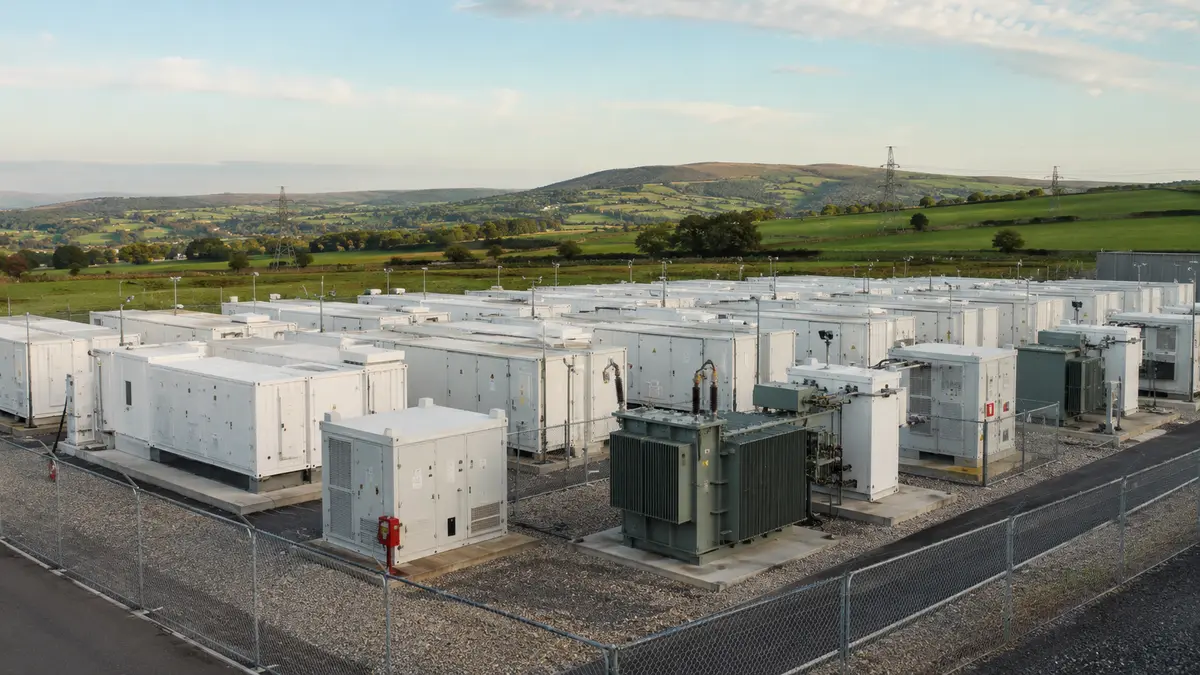
The Australian Energy Market Operator (AEMO) has announced a significant milestone in its latest annual report, revealing that a record 9.1 gigawatts (GW) of new renewable energy and storage capacity was connected to the National Electricity Market (NEM) in the financial year 2026 (FY26). This achievement marks more than a twofold increase compared to the previous year, underscoring the rapid growth of renewable energy sources in Australia. However, AEMO has cautioned that the reliability of this expanding capacity hinges on timely investments in infrastructure and system security.
AEMO’s Role and Achievements
AEMO operates as the independent system and market operator for Australia’s electricity and gas systems, overseeing real-time operations for the NEM, the Wholesale Electricity Market (WEM) in Western Australia, and Victoria’s Declared Transmission System. The organisation is also responsible for providing essential forecasting, planning, and advisory services that guide investment decisions across the energy sector.
In FY26, AEMO reported that the total capacity of new generation and storage that reached full output in the NEM was 9.1 GW. This figure is a remarkable increase from the 4.4 GW connected in FY25. Additionally, the registration and application approvals for new projects reached 7.4 GW and 14.2 GW, respectively, while the overall connections pipeline expanded by 42%, growing from 53 GW to 75.4 GW.
Efficiency Improvements
The report highlights notable efficiency gains in the connections process. The average duration for AEMO’s application reviews improved by 9%, reducing the time to 8.6 months. Furthermore, reforms in commissioning processes led to a 10% decrease in commissioning time, bringing it down to 4.5 months. These improvements are critical as they facilitate quicker integration of renewable energy sources into the grid.
Renewable Energy Generation Trends
Renewable energy generation, which includes contributions from rooftop solar installations, accounted for 46% of total generation in the NEM during FY26. Notably, this figure exceeded 50% in the second quarter of the financial year and reached an instantaneous record of nearly 80% for a half-hour period on 11 October 2025. In the WEM, renewable energy generation made up 40.8% of total generation, achieving an instantaneous peak of 91% on 20 December 2025.
The increasing capacity of battery storage, both at grid-scale and residential levels, has played a pivotal role in shifting excess renewable energy generated during the day to meet evening peak demand. This transition has significantly reduced reliance on coal and gas-fired generation, contributing to lower wholesale electricity prices and decreased price volatility.
Investment in System Security
AEMO’s report emphasises the necessity for proactive investments in reliability and system security, rather than reactive measures in response to known transition points, such as the retirement of coal-fired power stations. In December, AEMO released its second annual Transition Plan for System Security (TPSS), which outlines critical transition points and the requirements for maintaining a stable and secure power system over the next decade.
According to the report, new investments and reforms are essential to ensure system security ahead of these transition points. AEMO’s NEM Reform Program has made strides in implementing the Australian Energy Market Commission’s (AEMC) Improved Security Framework, which became operational in December. This framework promotes a more proactive approach to securing essential services, including system strength and inertia, thereby enhancing AEMO’s capacity to manage system security in real-time.
Future Planning and Investment Needs
In June 2026, AEMO released the 2026 Integrated System Plan (ISP), which was developed after extensive analysis and engagement with nearly 2,000 stakeholders. The ISP identifies the least-cost development path for the future, reaffirming that a combination of renewable energy, transmission and distribution connections, firmed with storage and supported by gas, represents the most economical solution for ensuring secure and reliable electricity as coal plants retire and electricity consumption increases.
The ISP sets a storage requirement of nearly 40 GW, comprising 35 GW of short- and medium-duration storage for daily firming and 5 GW of long-duration storage for seasonal reliability. The Step Change scenario, deemed most likely by AEMO, anticipates an investment of AU$106 billion (approximately US$73 billion) by 2050 to meet these requirements.
Capital Investment and Future Outlook
AEMO’s FY26 capital investment programme, the largest to date at AU$216.6 million, allocated AU$84.4 million towards reform initiatives aimed at implementing complex rule and policy changes. The remaining funds were directed towards modernising operational and business systems across the NEM, WEM, and gas markets.
Through its subsidiary, AusEnergy Services Limited (ASL), AEMO has completed 17 tenders across three government schemes by 30 June, supporting 142 projects that represent around 25 GW of generation and 100 GWh of storage capacity. ASL has implemented a streamlined single-stage tender process to accelerate outcomes, completing seven Capacity Investment Scheme (CIS) tender rounds across the NEM and WEM during FY26.
Looking ahead, AEMO’s 2026 Electricity Statement of Opportunities indicates a clearer pathway to maintaining reliable supply over the next decade. However, it warns that continued investment in system security services will be necessary as inverter-based resources become more prevalent. AEMO’s chief executive, Daniel Westerman, has emphasised that the next wave of investment beyond 2030 will be critical for maintaining reliability.
Emerging Demand and Policy Implications
The report identifies data centres as one of the fastest-growing sources of electricity demand in Australia, now classified as a distinct category in AEMO’s planning and forecasting. Electricity consumption from data centres is projected to rise from approximately 3% of NEM operational consumption today to around 8% by 2030. Seventeen proposed data centre projects, with a combined maximum connection capacity of 9 GW, are currently progressing through the transmission connection process.
This surge in demand is influencing national policy, with the AEMC framework requiring large data centres to offset their consumption with new renewable energy generation and secure contracts for firming capacity. AEMO’s report highlights the need for targeted investment in capability, training, and systems to ensure operational readiness and resilience amid increasing complexity and evolving risks in the energy landscape.
Source: Energy Storage News