Portugal and UK Collaborate to Boost Floating Offshore Wind Industry
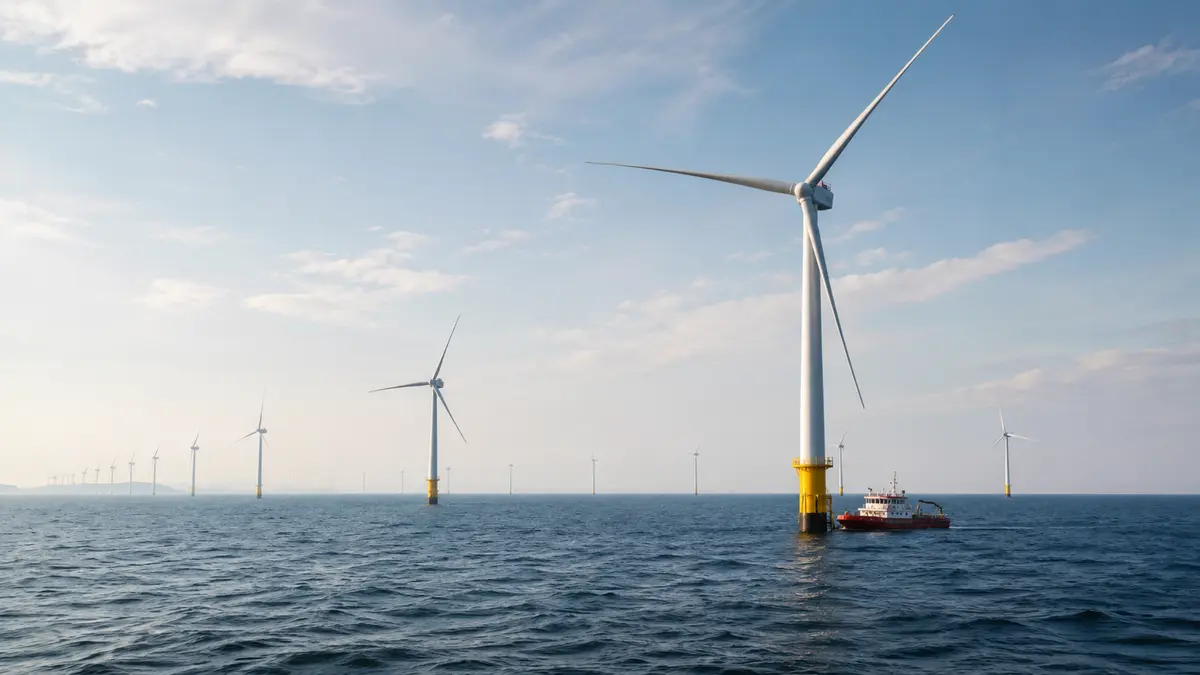
On 23 November 2026, WavEC Offshore Renewables and the British Embassy in Lisbon announced a significant initiative aimed at accelerating the floating offshore wind industry in both Portugal and the UK. As the sector enters a critical phase of commercialisation, the two nations are poised to leverage their respective strengths to unlock the full potential of floating offshore wind technology.
Upcoming Seminar to Foster Collaboration
A seminar titled ‘Towards a Shared Vision for Floating Offshore Wind’ is scheduled for 2 December at the Museu do Oriente in Lisbon. This event will gather key stakeholders from the floating offshore wind sector, including representatives from The Crown Estate, Global Wind Energy Council, Ocean Winds, and various other industry leaders. The seminar is organised in partnership with the British Embassy in Lisbon and supported by the UK Government’s Department for Energy Security and Net Zero, as well as the Department for Business, Innovation, Science and Trade.
Current State of Floating Offshore Wind
The timing of this seminar is particularly relevant, as the floating offshore wind sector is experiencing significant growth. According to the latest RenewableUK EnergyPulse Report, global operational floating offshore wind capacity reached 382 MW in October 2026, marking a 38% increase from the previous year. Notably, 109 MW of new capacity became operational within the year, highlighting the technology’s increasing momentum.
The report identifies the UK as having the most credible floating offshore wind development pipeline globally, with a potential capacity of 28.4 GW. Currently, 592.5 MW is backed by Contracts for Difference, with an additional 832 MW eligible for the latest auction round. Projections indicate that UK operational floating wind capacity could reach 1 GW by 2032 and 3 GW by 2034, positioning the UK as a leader in the European floating wind market over the next decade.
Portugal’s Ambitious Goals
Portugal is also well-positioned to take advantage of the emerging floating offshore wind market. Building on the experience gained from the WindFloat Atlantic demonstration project, the country has set an ambitious target of deploying 2 GW of offshore wind by 2030, with longer-term potential estimated at around 10 GW. However, achieving these targets will necessitate significant advancements in regulatory frameworks, auction design, grid infrastructure, port readiness, and investment conditions.
Learning from the UK Experience
The UK’s extensive experience in navigating the challenges associated with floating offshore wind development serves as a valuable reference for Portugal. With a robust development pipeline, established offshore engineering capabilities, and an evolving industrial supply chain, the UK can provide insights that will aid Portugal in formulating its deployment strategy.
Yet, the challenges facing both nations extend beyond the development of individual projects. Key issues such as reducing technology costs, attracting private investment, developing a skilled workforce, and creating the necessary industrial capacity for manufacturing, assembling, and servicing floating wind infrastructure will be crucial for establishing a competitive commercial market.
Seminar Focus Areas
The Lisbon seminar will address these pressing issues through four dedicated sessions. These sessions will explore the long-term national value of floating wind investments, the conditions necessary for deployment, technological innovations, and opportunities for strengthening bilateral cooperation. A roundtable discussion will conclude the event, allowing participants to identify shared priorities and practical actions for the next three to five years.
Industry Support and Insights
WavEC Lisbon 2026 has garnered support from various sponsors, including Gold Sponsor MODEC, Silver Sponsors BayWa r.e., ISQ, and Tadek Ocean Engineering, as well as Bronze Sponsors Etermar Energia, MDS Group, Norwegian Offshore Wind, and X1Wind. Marco Alves, CEO of WavEC Offshore Renewables, emphasised the importance of creating the right conditions to attract investment and foster technological innovation. He stated, “Portugal has a significant opportunity to establish itself in the emerging floating offshore wind market, but unlocking this potential will take more than ambitious targets. It requires creating the right conditions to attract investment, foster technological innovation, mobilise industry, and drive sustainable industrial growth.”
British Ambassador Lisa Bandari echoed this sentiment, noting the shared ambition of the UK and Portugal for a cleaner, more secure energy future. She remarked, “Building on 25 years of UK experience in developing one of the world’s leading offshore wind markets, this seminar brings together British and Portuguese expertise, industry, and innovation to deepen collaboration, strengthen partnerships, and explore new opportunities for investment and green growth.”
Technological Innovations and Future Prospects
Andrew Kyriakides, Project Manager at MODEC, highlighted the importance of technological innovation in addressing the challenges facing floating offshore wind. He mentioned that MODEC is developing innovative solutions, such as the i-TLP technology, which aims to improve platform motions, reduce costs, and support more efficient maintenance. As the industry progresses towards commercial-scale deployment, he believes that combining proven offshore engineering expertise with technological innovation and international collaboration will be essential for making floating wind more competitive and commercially viable.
Conclusion
Recent industry research underscores the necessity of coordinated action to enhance the commercial competitiveness of floating offshore wind. A landmark study published by ORE Catapult in October 2026 identified significant opportunities for cost reduction through standardisation, improved access to finance, and sustained project deployment. Additionally, an industry action plan developed by the Global Wind Energy Council (GWEC), involving over 50 organisations, has called for closer collaboration between governments and industry to accelerate investment, strengthen supply chains, and unlock commercial-scale projects.
By connecting expertise and experience across these two complementary offshore wind markets, WavEC and the British Embassy aim to establish a stronger foundation for collaboration. This partnership is expected to support the development of floating offshore wind as a significant contributor to future energy security, industrial growth, and the blue economy.
This article was submitted via the World of Renewables press desk.
You can join now and receive a FREE HTML email send to 10,000 contacts of your choice (normally £1,900).
Create a free account to save companies and get alerts, or read without limits.