Chancellor’s Energy Plans Criticised for Focusing on Grid Expansion Over Resilience
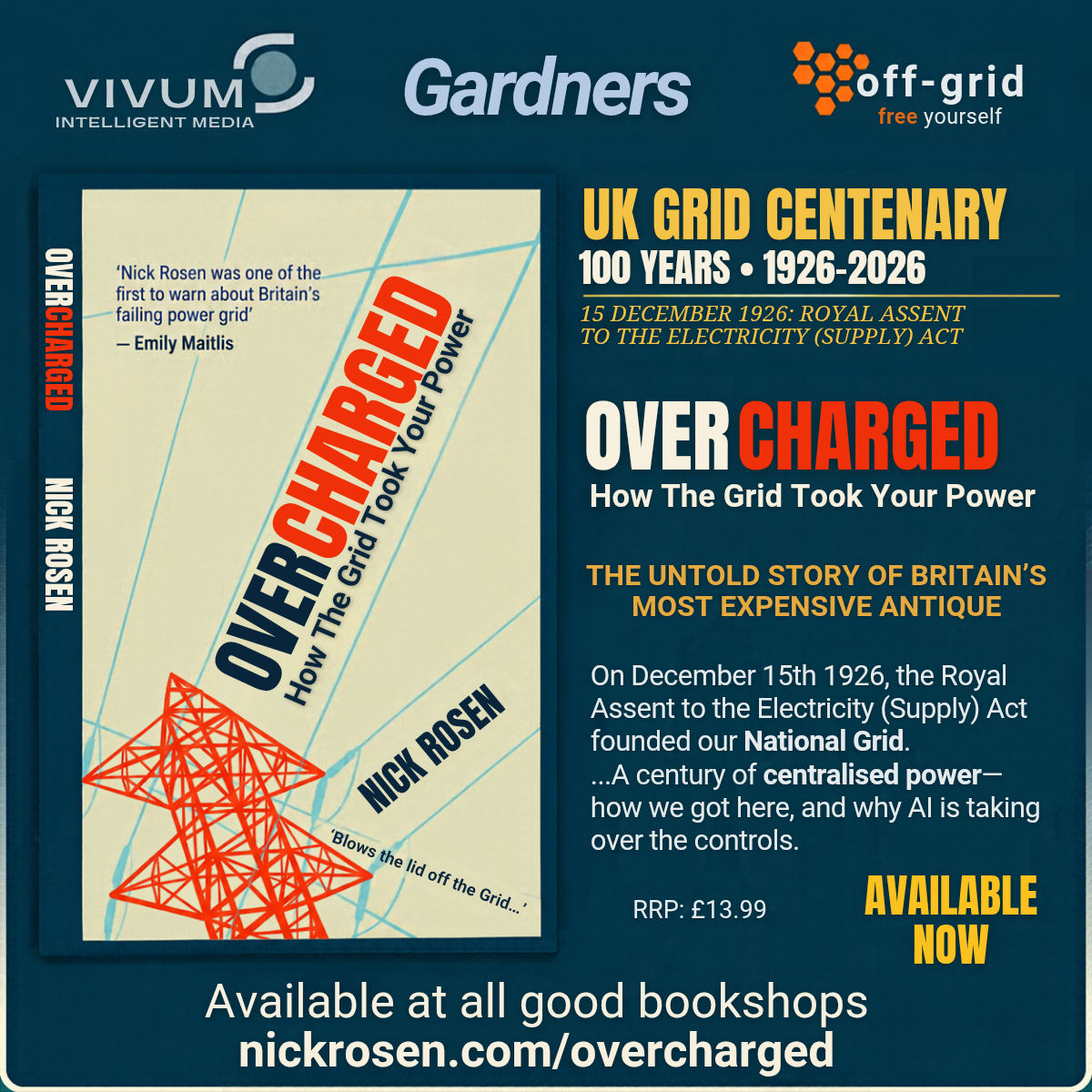
In a recent statement, Nick Rosen, an expert in off-grid energy solutions and author of the book “OVERCHARGED: How The Grid Took Your Power,” has voiced strong criticism of the UK Government’s current energy strategy. He argues that the Chancellor’s approach, which heavily emphasises expanding the national grid, overlooks the critical need for energy resilience through local generation and community energy initiatives.
Government’s Investment Imbalance
The Chancellor has announced a commitment to net zero by 2050, alongside plans for faster grid connections. However, the disparity in funding allocation has raised eyebrows. The Government has earmarked £30 million for community energy projects as part of a broader £1 billion package, while a staggering £70 billion is set to be invested in the national electricity grid over the next five years. This stark contrast highlights a significant imbalance in the Government’s energy investment priorities.
Local Generation vs. Centralised Systems
Rosen points out that local energy generation and the grid are not mutually exclusive. He argues that a resilient and affordable energy future cannot be achieved by solely focusing on expanding the grid while neglecting local alternatives. “That is an extraordinary imbalance,” he stated, emphasising the importance of diversifying energy sources to enhance resilience.
He further questions the Chancellor’s assertion that new projects should only be pursued if they connect to the grid. “Why should connection to the grid be a condition? The test should be whether a project delivers affordable, reliable energy,” Rosen contends. He advocates for local generation and storage solutions that can provide power closer to where it is needed, thereby alleviating pressure on the national grid and reducing reliance on a centralised system that is becoming increasingly costly.
Decentralised Energy Solutions
Rosen acknowledges the need for grid investment but insists that it should not be the sole focus. He calls for the Government to prioritise funding for smaller, flexible power stations and energy storage solutions, which can often be developed more quickly than large-scale infrastructure projects. “Hundreds of shovel-ready decentralised energy projects are waiting for finance,” he noted, urging the Government to unlock these initiatives instead of defaulting to grid expansion as the primary solution.
Immediate Policy Changes Needed
While the Chancellor has indicated that transforming the energy system will take time, Rosen believes that the necessary policy changes to accelerate the development of decentralised energy can be implemented immediately. He stresses that many projects are ready to move forward but require financial backing and a regulatory framework that supports their development. “We can start building resilience now rather than waiting years for the grid to catch up,” he asserts.
Value for Money and Future Commitments
Before committing consumers to further expenditure on grid expansion, Rosen urges the Government to evaluate whether its existing infrastructure commitments represent the best value. He questions how much of the costly grid expansion could be avoided through investments in local generation, storage, and flexible power solutions. This consideration is crucial as the UK navigates its path towards achieving net zero emissions.
Conclusion: A Call for an Energy Revolution
In his book “OVERCHARGED: How the Grid Took Your Power,” Rosen explores the historical entrenchment of the grid in everyday life and its continued dominance despite advancements in technology that enable greater energy independence and competition. He concludes that achieving net zero does not necessitate perpetual dependence on the grid. Instead, he advocates for an energy revolution that prioritises local generation and resilience over mere grid expansion.
As the UK grapples with its energy future, the debate surrounding the balance between grid investment and local energy solutions is more pertinent than ever. Rosen’s insights challenge policymakers to rethink their strategies and consider a more diversified approach to energy resilience.
This article was submitted via the World of Renewables press desk.
You can join now and receive a FREE HTML email send to 10,000 contacts of your choice (normally £1,900).