Recent Developments in Renewable Energy Projects Across the Globe
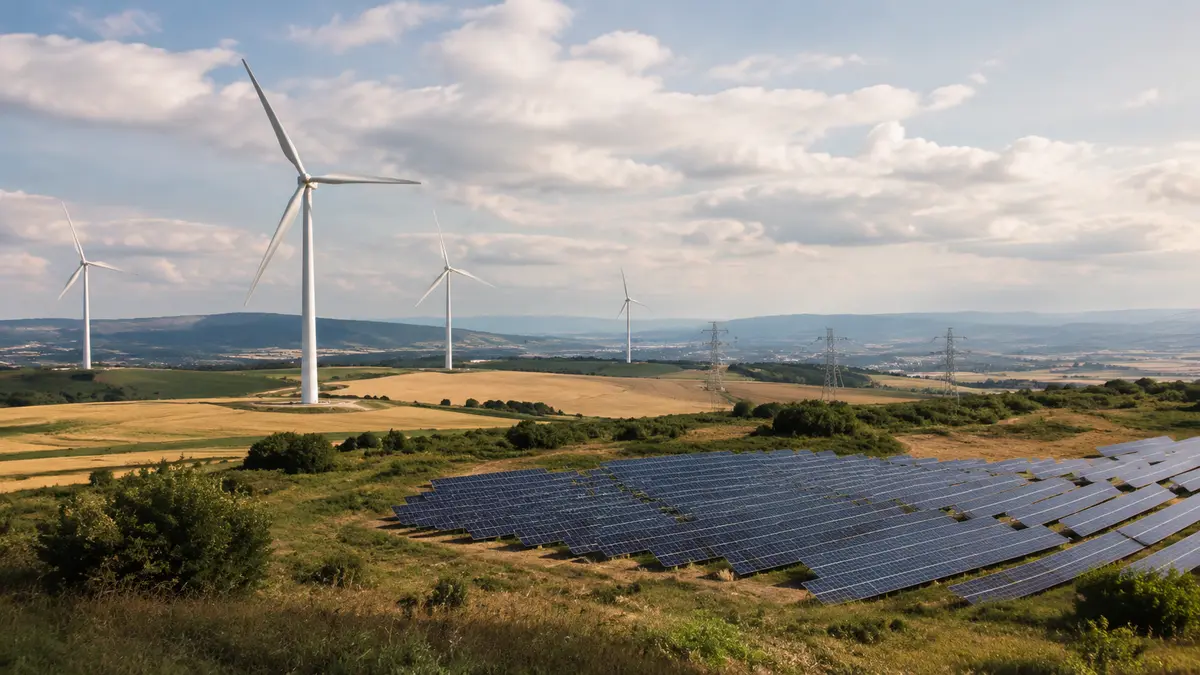
Recent months have seen significant advancements in renewable energy projects worldwide, highlighting the global shift towards sustainable energy solutions. This article delves into notable developments in Puerto Rico, Australia, Chile, India, and Indonesia, showcasing the diverse approaches being taken to enhance energy generation and storage capabilities.
Financing Secured for Puerto Rican Solar Park
Infinigen, an independent power producer based in Puerto Rico, announced in late August the successful closure of a $33 million tax equity investment for the Yabucoa Solar Project, facilitated by Foss & Co. This financial backing also includes a commitment of an additional $26 million for a future battery storage project at the same site. The Yabucoa Solar Park, with a capacity of 42.6 MW, will be Infinigen’s third utility-scale project in Puerto Rico, complementing its existing Horizon Solar Park and Oriana Solar Park, which together contribute a total of 115 MW of capacity.
The planned energy storage facility will mark Infinigen’s entry into standalone battery storage, a crucial step in enhancing the reliability and efficiency of renewable energy systems. Infinigen operates under the ownership of a fund managed by ArcLight Capital Partners, a firm that has been actively investing in electrical infrastructure since its inception in 2001.
Australia Launches Offshore Wind Auction
Australia has taken a significant step in its renewable energy journey by opening its first auction for offshore wind energy in August. This initial offering is focused on projects located off the southeastern state of Victoria, which is home to Melbourne. Currently, renewable energy accounts for approximately 45% of Victoria’s total power generation. The framework for offshore wind was established in 2021, with the first wind zones declared in the Gippsland area in 2022.
By 2024, Australia had awarded a dozen feasibility licenses for offshore generation, amounting to a potential 10 GW of capacity, although some companies, including Equinor and RWE, later withdrew from these licenses. The auction process, which began on August 26, 2023, is set to continue until August 2027, with contracts expected to be awarded in 2028. Jaclyn Symes, the Minister for Energy and Resources, stated that bids will be assessed based on value for money, deliverability, and the benefits they provide to local workers and communities. The first tender aims to secure 2 GW of offshore wind capacity, with Victoria setting ambitious targets of 2 GW by 2032, 4 GW by 2035, and 9 GW by 2040.
Chilean Group Proposes Extension of Diesel-Fired Plant
In Chile, International Power Services (IPS) has submitted a $125 million project for environmental review, aiming to extend the operational life of a diesel-fired power plant while also incorporating battery storage and a new substation. The project seeks to extend the lifespan of the 155-MW Central Cardones plant, which has been operational since 2009, by an additional 20 years, pushing its operational timeline to 2049. According to the environmental review documentation, the plant will continue to operate with its existing facilities and equipment, requiring no additional construction work.
In addition to the lifespan extension, the project includes the installation of a 120-MW/720-MWh energy storage system and an air-insulated substation. A solar park with a capacity of 437 kW, located adjacent to the Central Cardones facility, has been operational since 2015. Diesel generation in Chile primarily serves as backup power during peak demand periods. IPS currently operates a total of 412 MW of generation capacity across three plants in Chile, along with an additional 318 MW across three facilities in Guatemala.
Innovative Technology from California Utilised in India
TS Conductor, a California-based company specialising in advanced conductor technology, announced in August that the Himachal Pradesh State Electricity Board Limited (HPSEBL) in India has selected its Aluminum Encapsulated Carbon Core (AECC) conductors for a forthcoming transmission grid modernisation project. This commercial order was awarded through TS’s regional partner, Laser Power & Infra. The AECC technology will be employed in a turnkey reconductoring project aimed at enhancing power supply reliability in the Nalagarh region.
The AECC technology is designed to be installed using standard practices and has demonstrated the ability to transmit two to three times more power than traditional conductors. Its encapsulated core is fully protected from physical and environmental degradation, offering a significant advantage over earlier generation alternatives. TS Conductor manufactures and ships its pre-tensioned encapsulated carbon fiber composite core technology to India for the completion of the manufacturing process. The upcoming HPSEBL project will involve the reconductoring and modernisation of several medium-voltage 11-kV feeder circuits, as well as the three-phase lines that connect to the 11/0.4-kV distribution transformers.
Coal Gasification Initiative in Indonesia
In a notable development in Indonesia, U.S. technology firm Latitude Energy has signed a memorandum of understanding (MoU) with the country’s sovereign wealth fund, Danantara Indonesia, to explore opportunities in coal gasification. Latitude Energy plans to utilise its Transport Integrated Gasification (TRIG) technology, which converts coal into synthetic gas. This partnership aligns with the Indonesian government’s strategy to achieve energy self-sufficiency by leveraging low-calorie coal resources, as Indonesia is one of the world’s largest coal producers.
Officials have indicated that this collaboration with Latitude Energy presents Indonesia with the chance to establish a scalable and sustainable coal gasification platform. Latitude Energy views Indonesia not only as an initial market but also as a potential launchpad for broader coal gasification initiatives across Southeast Asia. Countries in the region are increasingly considering coal gasification as a means to exploit domestic resources and reduce reliance on liquefied natural gas imports for power generation and industrial applications.
Source: POWER Magazine
Projects connected to this report.
Move directly from the article into the underlying asset, companies and project timeline.