Brazil’s Urban Solid Waste Management and Energy Solutions
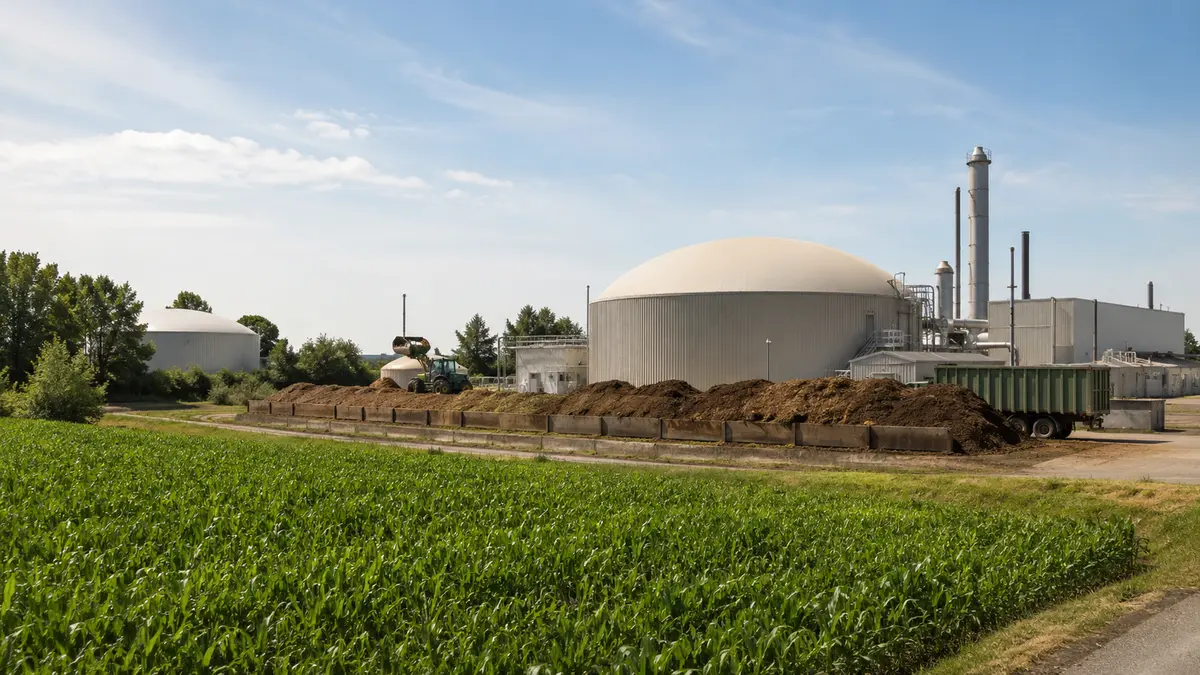
In 2024, Brazil produced around 81.6 million tonnes of Urban Solid Waste (RSU). Of this total, approximately 11.7% was utilised through bioenergy recycling, while 8.7% was processed via mechanical recycling. The final disposal scenario in the country reveals that landfills accounted for 59.7% of the total collected waste, which was disposed of in an environmentally appropriate manner. Conversely, 40.3% (about 33 million tonnes) was inadequately discarded in open dumps or controlled landfills. The excessive reliance on landfills and improper waste disposal has continuously pressured the environment, contributing to issues such as greenhouse gas emissions and global warming, as well as health and safety concerns related to nutrient enrichment potential.
Consequently, it is essential to explore additional methods for the proper utilisation of urban solid waste in today’s world. One energy solution being developed by Brasil Biomassa involves the establishment of a Urban Solid Waste Biorefinery. This facility aims to convert domestic and urban waste, specifically the organic fraction, into high-value bioproducts. It replaces traditional landfilling and incineration with a circular economy model, creating sustainable revenue streams from low-cost or negative-value waste.
The biorefinery will process raw materials into usable products through biochemical routes (such as anaerobic digestion and fermentation) or thermochemical routes (including gasification and pyrolysis). Brasil Biomassa has identified eleven energy alternatives for utilising biomass from urban solid waste:
- Production of second-generation ethanol (2G) from urban solid waste in the form of complex lignocellulosic biomass (paper, cardboard, and organic food waste), converting it into fermentable sugars for ethanol production.
- Direct combustion and incineration of biomass and urban solid waste, essential processes for energy recovery that convert unwanted organic waste into thermal and electric energy.
- Gasification of urban solid waste to produce syngas, converting carbon-rich organic waste into a combustible mixture known as synthesis gas.
- Thermochemical gasification of urban solid waste to produce green hydrogen, converting organic RSU and biomass into hydrogen-rich synthesis gas. This process diverts waste from landfills, generating renewable, low-carbon hydrogen for fuel cells, electricity generation, or industrial use.
- Thermochemical conversion through medium-temperature pyrolysis of urban solid waste to produce biochar, a key process that transforms organic waste into carbon-rich biochar, pyroligneous extract, and wood vinegar, while simultaneously reducing landfill volume and producing sustainable soil enhancement material.
- Thermochemical conversion through pyrolysis of the biogenic fraction of urban solid waste to produce biocarbon, transforming urban organic waste into high-value biocarbon through thermal decomposition in an oxygen-free environment.
- Anaerobic digestion of urban solid waste to produce biogas and biomethane, a biological process where microorganisms decompose biodegradable urban solid waste in the absence of oxygen, converting organic biomass into biogas (CH₄ and CO₂) that can be refined into high-purity biomethane.
- Biogenic CO₂ from urban solid waste as a neutral or negative emissions alternative, originating from organic materials and considered carbon-neutral when captured, enabling negative emissions and circular economy solutions.
- Bioenergy and carbon capture and storage from urban solid waste, integrating carbon capture and storage (CCS) with bioenergy from urban solid waste to produce energy with negative carbon emissions.
- Briquettes from urban solid waste as a solid fuel for energy generation, transforming combustible organic waste into densified, clean-burning biomass briquettes.
- Pellets from urban solid waste as a zero-carbon solid biofuel, processing combustible waste into highly dense and uniform fuel pellets for industrial boilers and energy generation.
This article was submitted via the World of Renewables press desk.
You can join now and receive a FREE HTML email send to 10,000 contacts of your choice (normally £1,900).