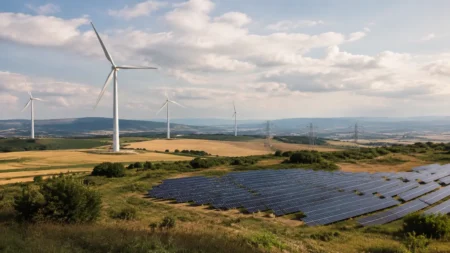


The increasing prevalence of distributed energy resources (DERs), such as rooftop solar panels and electric vehicle (EV) charging stations, is significantly altering the landscape of power systems worldwide. As these technologies proliferate, the need for effective integration into centralized control systems has become crucial for maintaining grid stability.
Recent analyses highlight that countries like India, the UK, and China are facing unique challenges and opportunities as they adapt to this shift. The integration of DERs into existing power grids requires sophisticated management strategies to ensure that energy supply and demand remain balanced, particularly as renewable energy sources can be variable.
In India, for instance, the rapid adoption of solar energy has prompted the government to explore innovative solutions for integrating these resources into the national grid. The UK has also made strides in this area, with initiatives aimed at enhancing the resilience of its energy infrastructure amid increasing reliance on renewable sources. Meanwhile, China is leveraging its vast manufacturing capabilities to scale up the deployment of DERs, while simultaneously investing in smart grid technologies to manage these resources effectively.
Modern platforms are emerging to facilitate this integration. Technologies such as COPA-DATA’s zenon are designed to support the secure and real-time coordination of diverse energy assets. These systems enable operators to monitor and control various energy sources, ensuring that the grid can respond dynamically to fluctuations in energy generation and consumption.
As the energy landscape continues to evolve, the integration of distributed energy resources into centralized control systems will be pivotal in achieving a stable and reliable power supply. Policymakers and energy providers must prioritize the development of robust frameworks that can accommodate this transition, ensuring that the benefits of DERs can be fully realized without compromising grid integrity.
This article was submitted via the World of Renewables press desk.
You can join now and receive a FREE HTML email send to 10,000 contacts of your choice (normally £1,900).