


Author: WoREA Editorial Team

Plug-in hybrid electric vehicles (PHEVs) can reduce fuel consumption and greenhouse gas emissions compared to their gas-only counterparts. Researchers have taken the technology one step further, demonstrating how to improve the efficiency of current PHEVs by almost 12 percent. Read more here:: http://feeds.sciencedaily.com/~r/sciencedaily/matter_energy/fuel_cells/~3/30AY2Zm-9T4/160209132051.htm

Read More

Plug-in hybrid electric vehicles (PHEVs) can reduce fuel consumption and greenhouse gas emissions compared to their gas-only counterparts. Researchers have taken the technology one step further, demonstrating how to improve the efficiency of current PHEVs by almost 12 percent. Read more here:: http://feeds.sciencedaily.com/~r/sciencedaily/matter_energy/fuel_cells/~3/tdW_p_RlT_c/160209132051.htm

Read More

Researchers have studied the interaction of two materials, halide perovskite and quantum dots, revealing enormous potential for the development of advanced LEDs and more efficient solar cells. Read more here:: http://feeds.sciencedaily.com/~r/sciencedaily/matter_energy/solar_energy/~3/Ieds0iJnB7I/160209090712.htm

Read More

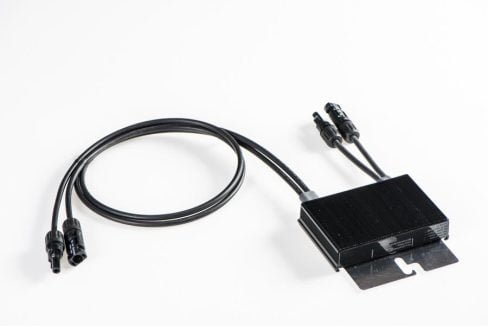
Herzelya Pituach, Israel (February 9, 2016) – SolarEdge Technologies, Inc. (“SolarEdge”) (NASDAQ: SEDG), a global leader in PV inverters, power optimizers, and module-level monitoring services, announced that it has shipped its 10 millionth power optimizer. With systems installed in more than 90 countries, SolarEdge reached its 10 millionth shipped power…

Read More

By Wayne.Hicks@nrel.gov (Wayne Hicks) February 9, 2016 A new biorefinery process developed by scientists at the Energy Department’s National Renewable Energy Laboratory (NREL) has proven to be significantly more effective at producing ethanol from algae than previous research. The process, dubbed Combined Algal Processing (CAP), is detailed in a new…

Read More